You Want the 1950s Economy? Then You Don’t Get to Ignore the Taxes
Every few years, the same nostalgia resurfaces. People talk longingly about the America of the 1950s and 1960s—a time of a booming economy, affordable housing, rising wages, and a strong, expanding middle class.
HISTORYECONOMICSPOLITICS
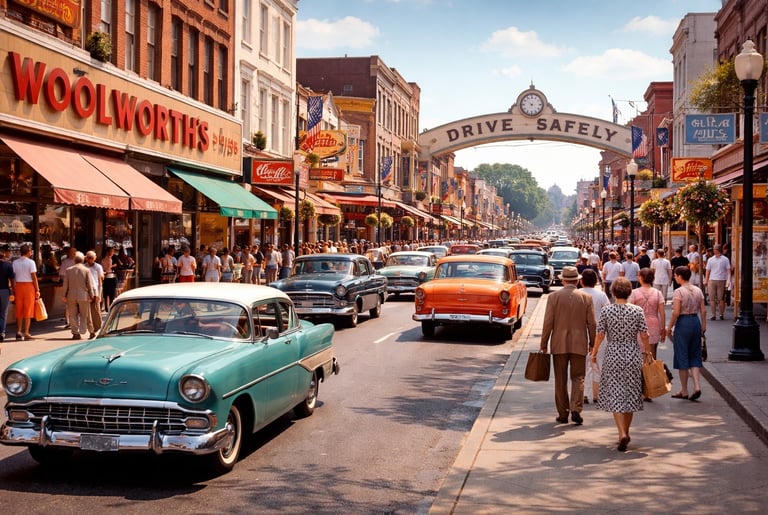
Every few years, the same nostalgia resurfaces. People talk longingly about the America of the 1950s and 1960s—a time of a booming economy, affordable housing, rising wages, and a strong, expanding middle class. They frame it as a golden age, proof that America used to work and could again if we just went “back.”
But what most of these arguments rely on is selective memory.
What people want are the results of that era, not the policies that made those results possible.
Because here’s the part that almost never makes it into the conversation: during that so-called golden age, the wealthiest Americans paid dramatically higher taxes than they do today. The top marginal individual tax rate reached as high as 77%, and corporate tax rates hovered around 50%. Those numbers weren’t accidents. They were a deliberate choice.
And they mattered.
Prosperity Was Built, Not Discovered
The economic boom of the mid-20th century didn’t happen by chance. It was built through sustained public investment. High tax revenues funded massive infrastructure projects like the interstate highway system. They expanded access to higher education through the GI Bill. They supported scientific research, manufacturing growth, and housing development. They strengthened public institutions and created an environment where workers—not just shareholders—benefited from economic growth.
That money circulated back into the economy. It raised productivity. It increased wages. It made it possible for a single income to support a family, buy a home, and plan for retirement.
In other words, the middle class didn’t thrive despite high taxes on the wealthy. It thrived because of them.
You Can’t Have the Outcome Without the Input
What’s striking today is how many people praise that era while aggressively opposing the very tax structure that sustained it. They want 1950s affordability with 2020s tax rates. They want strong public services without paying for them. They want a robust middle class while defending an economic system that funnels wealth upward at historic rates.
You don’t get to cherry-pick history like that.
You don’t get the highways without the taxes that paid for them. You don’t get affordable education without public investment. You don’t get broad prosperity while allowing extreme wealth accumulation to go largely untaxed.
The math doesn’t work. It never has.
The Real Reason People Don’t Want to Go Back
When you strip away the nostalgia, what becomes clear is that many people don’t actually want to “go back” to the economic policies of the 1950s and 60s. They want the benefits without the responsibility. They want the image of prosperity, not the collective commitment that made it possible.
High marginal tax rates weren’t about punishment. They were about balance. They limited excessive accumulation at the top and reinvested that wealth into the broader society. They recognized a basic truth: an economy functions best when those who gain the most from it contribute proportionally to maintaining it.
That idea has been steadily dismantled over the past several decades—and the results are hard to miss.
If We’re Serious, Let’s Be Honest
So yes, if we truly want to return to the era people romanticize, let’s do it honestly. Let’s bring back the tax rates. Let’s restore corporate accountability. Let’s reinvest in public goods and rebuild the social contract that once made widespread prosperity possible.
But let’s stop pretending we can get there while clinging to policies that produced the opposite outcome.
You can’t rebuild yesterday’s middle class with today’s inequality. And you can’t invoke the past without accepting the price that was paid to create it.
AI Generated Image
trumpianinsanity.com © 2023-2025 All Rights Reserved
Trumpian Insanity empowers people with the knowledge and tools to participate in meaningful political discourse and contribute to positive change.
Reframe your inbox
Subscribe to my blog and never miss a story.
We care about your data in our privacy policy.