Who Gets to Carry a Gun in Trump’s America
There is a lie at the center of American politics that refuses to die: the idea that the right cares about freedom, gun rights, or the Constitution equally for everyone. The truth is uglier, and once you see it, you can’t unsee it.
RIGHTSPOLITICSREPUBLICANS

There is a lie at the center of American politics that refuses to die: the idea that the right cares about freedom, gun rights, or the Constitution equally for everyone. The truth is uglier, and once you see it, you can’t unsee it.
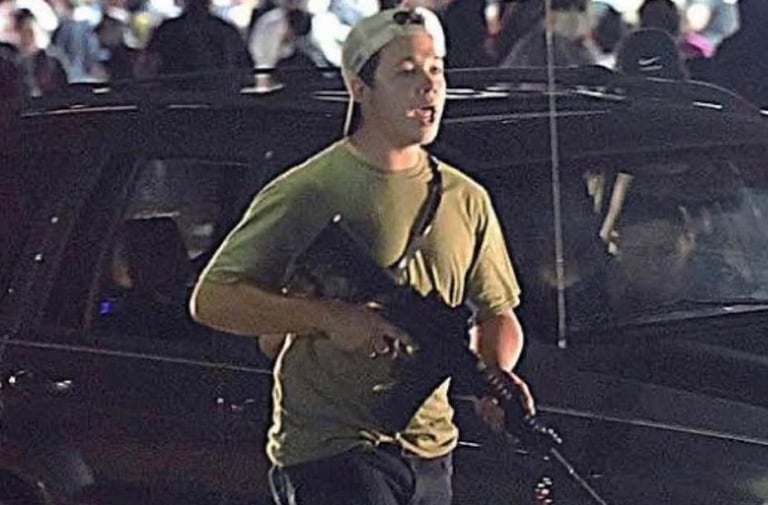
The same Trump political movement that celebrated Kyle Rittenhouse—a teenager who crossed state lines, inserted himself into a protest, and openly carried an AR-15—is now defending federal agents who killed a man for legally carrying a holstered gun he never touched.
That contradiction isn’t accidental. It’s the point.
The Case They Want You to Forget
In Minneapolis, federal immigration agents shot and killed a U.S. citizen during an enforcement operation. Government officials quickly labeled him a “gunman,” implying imminent threat. But video footage and eyewitness accounts tell a very different story.
The man was legally carrying a firearm, fully permitted. The gun remained holstered. Multiple videos show him holding a phone, not a weapon. At no point is there clear evidence that he drew, raised, or fired a gun. Yet he was shot and killed anyway.
This is not a gray area. In countless red-state talking points, this exact scenario—legal carry, no shots fired, no weapon drawn—is held up as the textbook example of lawful gun ownership.
Unless, apparently, the person holding the gun is inconvenient to power.
Kyle Rittenhouse: The Exception That Proves the Rule
Contrast that with Kyle Rittenhouse.
He showed up to a volatile protest armed with a military-style rifle. He actively moved through a crowd. He ultimately killed two people. And the Trump movement didn’t just defend him—they turned him into a symbol.
Trump praised him.
Right-wing media platforms lionized him.
Conservative influencers fundraised for him.
He became proof, they claimed, that armed civilians are the last line of defense against chaos.
So let’s be clear about what changed.
It wasn’t the gun.
It wasn’t the legality.
It wasn’t the claim of “self-defense.”
It was who was holding the power in that moment.
Gun Rights for Some, State Violence for Others
When a civilian aligned with right-wing politics carries a gun, it’s framed as freedom.
When federal agents aligned with Trump’s enforcement agenda kill someone, it’s framed as order.
When a citizen legally carries a firearm and doesn’t fit the narrative, suddenly the Second Amendment vanishes.
This is how authoritarian systems work:
Violence is justified when used by the state or its ideological allies
Rights are conditional, not universal
“Law and order” becomes a slogan, not a principle
The message is unmistakable: you don’t have rights—you have permissions. And those permissions can be revoked the moment you’re inconvenient.
This Was Never About Safety
If this were about safety, the standard would be consistent.
If this were about the Constitution, the rules wouldn’t change mid-sentence.
If this were about gun rights, a legally holstered firearm would not be a death sentence.
What we’re watching instead is the normalization of state violence paired with political favoritism. A culture where armed civilians are praised when they reinforce the narrative, and killed when they complicate it.
Remember This Moment
Remember who was celebrated.
Remember who was killed.
Remember who was believed without evidence.
Remember who was labeled a threat despite the video.
And most importantly, remember this:
Authoritarianism doesn’t arrive by banning guns first. It arrives by deciding who is allowed to have rights at all.
Never forget.
trumpianinsanity.com © 2023-2025 All Rights Reserved
Trumpian Insanity empowers people with the knowledge and tools to participate in meaningful political discourse and contribute to positive change.
Reframe your inbox
Subscribe to my blog and never miss a story.
We care about your data in our privacy policy.