When Companies Bow to Trump, It’s Not Ignorance
Every time a company, university, or institution caves to Donald Trump’s threats — pundits rush to call it “fear,” “confusion,” or “caution.” These are not people who misunderstand the law. These are people who no longer believe the law will matter.
TRUMPECONOMICSPOLITICSRIGHTS
Every time a company, university, or institution caves to Donald Trump’s threats — whether it’s over a lawsuit, a speech, or a symbolic gesture — pundits rush to call it “fear,” “confusion,” or “caution.” But that’s too generous. These are not people who misunderstand the law. These are people who no longer believe the law will matter.
They’re not misinformed. They’re making calculations. And the equation they’re working from is simple: the rule of law is dying, and power is replacing it.
The Law Is Still on the Books — But Not in Practice
Let’s be clear: every lawyer in these institutions knows their rights. Every executive knows where the Constitution stands. The First Amendment still exists. Contract law still exists. Legal protections still exist.
But they also know what happens to people who stand on principle while the ground beneath them is shifting. They’ve seen Trump and his movement test the boundaries of the law again and again — and win, or at least escape. They’ve seen courts stall, norms crumble, and accountability evaporate.
So when they fold, it’s not because they’ve forgotten what’s right. It’s because they’re adapting to what’s real. They’re making educated guesses about the direction of the country — and their conclusion is chilling: laws will soon be optional, and power will decide what’s “legal.”
They’re Not Afraid of Trump — They’re Betting on Him
At this point, Trump doesn’t even have to say a word. His record speaks for itself. He’s turned intimidation into a business model. He’s weaponized public rage as a form of legal pressure.
When companies preemptively cave to him, they’re not trembling in ignorance — they’re strategizing. They’re betting that Trump and Trumpism will keep rising, and that standing up to him will become not just risky, but suicidal. They are quietly choosing sides before the battle is even declared.
This isn’t cowardice. It’s complicity dressed as pragmatism.
The Collapse Comes Quietly
This is how democracies die in boardrooms, not battlefields.
Not with tanks in the streets, but with legal departments advising executives to “just let it go.” Not with dramatic showdowns, but with soft acquiescence — the kind that makes tyranny look orderly.
Every time an institution folds, it teaches the next one that resistance isn’t worth it. Every time a company chooses silence over principle, it normalizes submission. The law doesn’t vanish overnight; it just becomes irrelevant.
And when the moment comes that someone actually needs it — when the powerful decide to crush a critic, a journalist, a whistleblower — the law will be there, printed neatly on the page, but hollow. A relic of an era when rules meant something.
The Real Threat Isn’t Trump — It’s the People Who’ve Already Accepted His Future
Trump himself is predictable. He’s been the same blustering, corrupt, grievance-driven figure for years. The real story — the one historians will write about — is how easily so many people and institutions decided to cooperate.
They’ll say they were protecting shareholders. Protecting jobs. Avoiding controversy. But really, they were protecting themselves. They were smoothing the road for authoritarianism while convincing themselves they were just being “practical.”
And by the time the law stops protecting them too, it will be too late.
Because the moment you start acting as if the law no longer matters, you help make that world real.
When institutions cave to Trump, they’re not just surrendering to a man — they’re surrendering to a future where justice itself becomes negotiable.
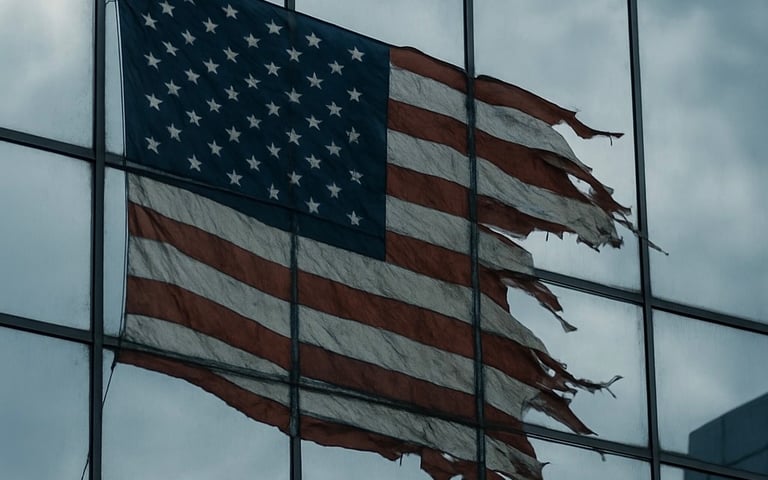
AI Generated Image
trumpianinsanity.com © 2023-2025 All Rights Reserved
Trumpian Insanity empowers people with the knowledge and tools to participate in meaningful political discourse and contribute to positive change.
Reframe your inbox
Subscribe to my blog and never miss a story.
We care about your data in our privacy policy.