Trump Says the Quiet Part Out Loud: Why This Is Not Normal
President Donald Trump’s latest public tirade contains one of the most startling confessions of his post-presidency. Enraged that Rep. Henry Cuellar did not switch parties after receiving a presidential pardon, Trump blasted him for a “lack of loyalty.”
TRUMPPOLITICSCRIME
A President Again Admits What Should Never Be True
President Donald Trump’s latest public tirade contains one of the most startling confessions of his post-presidency. Enraged that Rep. Henry Cuellar did not switch parties after receiving a presidential pardon, Trump blasted him for a “lack of loyalty.”
In one sentence, Trump confirmed something the nation has long suspected:
he views presidential pardons not as instruments of justice, but as political transactions.
Such a statement is not merely inappropriate—it is an indictment of his own understanding of constitutional power. And it is profoundly unacceptable in a democratic society.
The Pardon Power Is Sacred—Not a Tool for Personal Debt Collection
The presidential pardon is one of the most solemn powers granted by the Constitution. It exists to correct injustices, show mercy, and temper the harshness of law with wisdom and judgment.
Trump, however, has repeatedly treated it as a commodity.
By publicly stating that Cuellar “owed” him allegiance in exchange for a pardon, Trump revealed a worldview in which presidential power is private currency—a coin he believes he can use to buy loyalty, reshape political allegiance, or reward compliant behavior.
This is not how a president should think.
This is not how a public servant should act.
This is not an acceptable interpretation of constitutional authority.
It is a confession of misuse.
A Window Into Trump’s Understanding of Power
Trump’s comments serve as a rare moment of unfiltered honesty about his approach to governance. Throughout his presidency, critics accused him of wielding power transactionally—rewarding allies, punishing critics, and viewing loyalty to him personally as more important than loyalty to the Constitution.
Now he has essentially confirmed it.
His remark about Cuellar exposes the operating principle beneath so many of his decisions:
I granted you a favor, and you owe me allegiance.
This is not leadership; it is patronage.
This is not governance; it is the language of personal fiefdoms.
And it is wholly incompatible with democratic norms.
Corruption in Broad Daylight
It is one thing for a president to behave corruptly behind closed doors.
It is another for him to speak openly about corruption as though it is entirely appropriate.
When Trump rages that a lawmaker didn’t “pay him back,” he is describing—without hesitation—an arrangement that mirrors the structure of bribery:
a government action exchanged for political loyalty.
This doesn’t fall into a gray area.
It’s not ambiguous.
It’s not subtle.
It is a direct violation of the expectations Americans should have for their leaders.
No president should ever make decisions of mercy or justice based on personal gain.
No president should ever frame constitutional duties as political favors.
And no president should ever be comfortable admitting such behavior out loud.
The Most Disturbing Part: Trump Thinks This Is Normal
Trump’s openness reveals something deeper than anger at Cuellar—it reveals a belief that his approach is legitimate.
He is so accustomed to using power transactionally that he appears unaware—or unconcerned—that it is profoundly unethical. The guardrails that guide most presidents, even in moments of stress or frustration, are simply absent in Trump’s political calculus.
When he says the quiet part out loud, it’s not a mistake.
It’s a reflection of his worldview.
A worldview in which the presidency is not a public trust, but a personal asset.
A worldview in which loyalty belongs not to the country, but to him.
A worldview in which corruption isn’t hidden—it’s normalized.
Why This Cannot Be Treated as Routine Political Drama
America has seen fierce partisanship before. It has endured corruption, incompetence, and scandal. But the normalization of transactional justice—dispensed based on personal allegiance rather than fairness—is something far more dangerous.
If presidential pardons become bargaining chips, justice collapses.
If constitutional powers become tools of personal enrichment or political extortion, democracy erodes.
If leaders openly embrace corruption, the public becomes desensitized to it.
Trump’s admission is not a political gaffe.
It is a warning.
This Is Not Acceptable—and We Cannot Pretend It Is
Trump’s statement about Cuellar should be treated with the seriousness it deserves. It is not just a moment of anger or impulsive commentary. It is a declaration of how he views power, loyalty, and the purpose of high office.
This is not normal.
This is not harmless.
And it is not acceptable for any leader in a democratic nation.
America cannot function if its leaders view justice as a personal favor bank.
It cannot thrive if constitutional powers are treated as political tools.
And it cannot remain healthy if corruption is simply shrugged off as “Trump being Trump.”
Some things cross a line.
This is one of them.
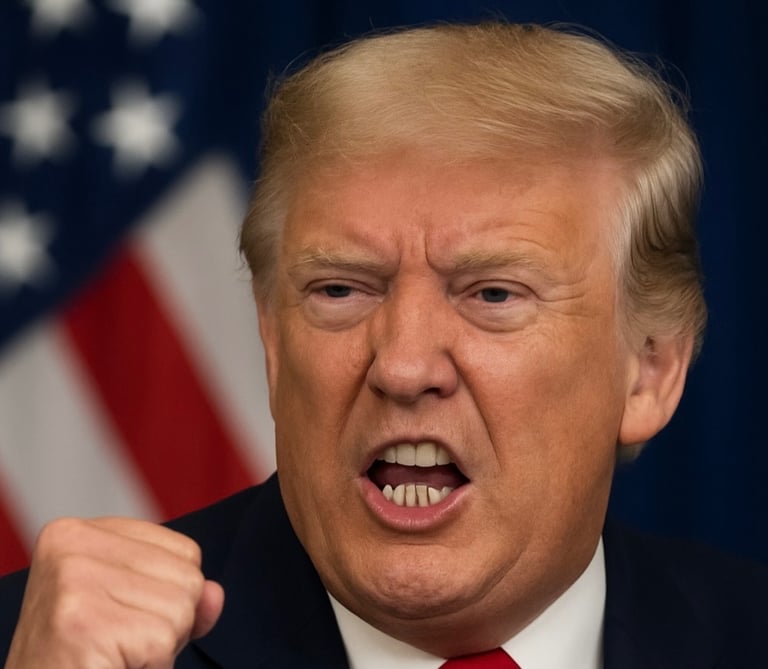
AI Generated Image
trumpianinsanity.com © 2023-2025 All Rights Reserved
Trumpian Insanity empowers people with the knowledge and tools to participate in meaningful political discourse and contribute to positive change.
Reframe your inbox
Subscribe to my blog and never miss a story.
We care about your data in our privacy policy.