The Mail Is Trusted, Until Democracy Uses It
There’s a glaring contradiction in American politics right now about the U.S. mail system—one so obvious it barely needs explaining, yet somehow keeps getting repeated like it makes sense.
POLITICSELECTIONSREPUBLICANSDEMOCRACYRIGHTS
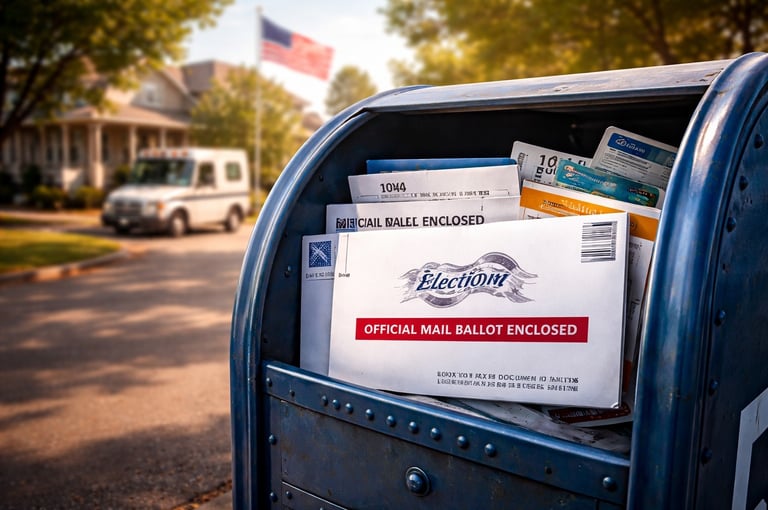
There’s a glaring contradiction in American politics right now about the U.S. mail system—one so obvious it barely needs explaining, yet somehow keeps getting repeated like it makes sense.
We are told, over and over again, that the United States mail system is secure, reliable, and essential. It delivers the most sensitive components of our lives: Social Security cards, tax returns, credit cards, medical information, legal documents, and government checks worth thousands of dollars. Entire sectors of the economy depend on it functioning with precision and trust.
And it does.
No widespread panic. No constant claims of systemic failure. No daily outrage about stolen identities arriving in envelopes.
But introduce one thing—ballots—and suddenly the narrative flips.
Now the mail is dangerous. Now it’s vulnerable. Now it’s supposedly incapable of handling something as basic as a vote.
Same system. Same infrastructure. Same workers.
Different political outcome.
The Convenience Problem
Mail-in voting does one very specific thing: it makes democracy easier to access.
It allows working people to vote without losing wages. It gives elderly and disabled citizens a practical way to participate. It removes logistical barriers that disproportionately affect people with less time, less flexibility, and fewer resources.
In short, it expands the electorate.
And that’s where the discomfort begins.
Because when more people vote, outcomes become less predictable—and harder to control.
The Selective Distrust
If the mail were truly as insecure as claimed, the consequences would be catastrophic far beyond elections.
Banks would collapse under fraud. Government payments would be unreliable. Identity theft through intercepted mail would be rampant at a scale that dwarfs anything we currently see. Businesses would abandon mail entirely.
But none of that is happening.
Instead, the distrust appears selectively—targeted precisely at the point where broader participation could shift political power.
That’s not a coincidence. That’s strategy.
What This is Really About
This isn’t about envelopes or drop boxes or postal routes.
It’s about control over who participates.
When a system is trusted for money but questioned for votes, the issue isn’t security—it’s access. It’s about shaping the electorate, not protecting it.
Because a democracy that’s easier to participate in is a democracy that’s harder to manipulate.
Simple Truth
You don’t get to claim the mail is secure enough for your paycheck, your identity, and your financial life—but too dangerous for your vote—without exposing the contradiction.
People see it.
And once they do, the argument stops sounding like concern and starts sounding like fear—fear of what happens when more voices are heard.
The truth is simple:
If the system is trusted with everything that matters in your life, it can be trusted with your vote.
And if someone is telling you otherwise, it’s worth asking why.
AI Generated Image
trumpianinsanity.com © 2023-2025 All Rights Reserved
Trumpian Insanity empowers people with the knowledge and tools to participate in meaningful political discourse and contribute to positive change.
Reframe your inbox
Subscribe to my blog and never miss a story.
We care about your data in our privacy policy.