I Miss Who We Were Before the Rage Took Over
Maybe we’ll never be who we were before the rage took over. But maybe, just maybe, hopefully, we can become something wiser, softer, and stronger in its aftermath.
POLITICSELECTIONSDEMOCRACYFREE SPEECHHISTORY
When Hope Turned Into Dread
There was a time—not all that long ago—when I could wake up and feel a sense of calm about the world. I could sip my coffee, glance at the morning headlines, and trust that, whatever the issue of the day, our leaders would at least try to act with decency and reason. I didn’t agree with every decision, but I believed in the intent. I believed we were trying, as a country, to do better.
Now, I wake up with a heaviness in my chest. A constant dread. A quiet rage humming in the background of my thoughts. It’s as though we all live with a low-grade fever of political and emotional exhaustion, the result of years spent watching cruelty normalized and decency mocked.
I used to be hopeful. Now, I’m just tired.
The Moment Everything Shifted
When Donald Trump entered the political scene, it was like watching a fault line split the country open. What had been simmering quietly for decades—the anger, the resentment, the prejudice, the fear—was suddenly unleashed into full daylight.
And for many Americans, that moment didn’t just alter politics; it altered the soul.
The Trump era did not create hate, but it gave it permission. It turned meanness into a movement and narcissism into a brand. It rewarded dishonesty and punished compassion. It didn’t just divide the country—it reshaped the emotional landscape of our daily lives.
I find myself missing the person I was before all this: more trusting, less cynical, more forgiving. I miss believing that people in positions of power were, at the very least, tethered to some moral compass.
Now it feels like we live in a world where empathy has been rebranded as weakness, and cruelty as courage.
How Rage Became the New Normal
Somewhere along the way, rage became the national mood. We began to see every disagreement as a threat, every difference as an enemy. Outrage became addictive—a hit of adrenaline to replace the harder work of understanding.
We stopped debating policies and started questioning humanity. Political differences turned into moral wars. Neighbors stopped waving. Families stopped talking. People began seeing each other not as fellow citizens, but as obstacles to be destroyed.
This constant climate of anger has changed us. I see it in my friends, in my community, and in myself. The sharp edges of mistrust and exhaustion cut deeper than any policy disagreement ever could.
I don’t like the person I’ve become in response. I don’t like feeling this defensive, this bitter, this wary. It’s not who I was. It’s not who I want to be.
The Country We Thought We Were
There was a version of America—imperfect though it was—that at least pretended to aspire toward decency. We taught our children that kindness mattered, that honesty was noble, that fairness was worth fighting for.
I miss that illusion, if that’s what it was.
I miss believing that we were all working toward something better, that we were capable of reason and empathy. That if you worked hard and treated people right, the world would somehow reflect that goodness back to you.
Now, it often feels like the loudest, meanest voices are rewarded, while the quiet ones—the thoughtful, the humble, the compassionate—are drowned out.
But I refuse to believe that decency is dead. It’s just been pushed underground, waiting for people brave enough to bring it back into the light.
The Price of Losing Civility
The loss of civility has cost us more than we realize. It’s not just political polarization—it’s the erosion of our shared humanity. We’ve stopped seeing each other as individuals and started reducing one another to caricatures: “liberal,” “conservative,” “patriot,” “traitor.”
It’s easier to hate an idea of someone than to sit across from them and remember their humanity. And the longer this goes on, the harder it becomes to find our way back.
When every conversation feels like a battle, it’s no wonder people retreat into their corners. But democracy doesn’t survive in corners. It survives in the spaces between them—where dialogue happens, where compromise exists, where empathy lives.
What I Want Now
The older I get, the less I crave victory and the more I crave peace. I don’t need to win every argument. I don’t need to be “right.”
What I need is a society that is more tolerant, more charitable, more humane. A place where we prioritize care over conquest. Where no one is left hungry, homeless, or hopeless. Where we can disagree without dehumanizing.
I want a world where we measure success not by how much we dominate others, but by how much we lift each other up. I want my country to be the kind of place that makes kindness feel safe again.
Finding Our Way Back
It’s tempting to think that the damage is irreversible—that the rage has permanently rewritten who we are. But I don’t believe that. I think there’s still a quiet majority of Americans who long for decency, who ache for normalcy, who want to feel proud of our shared humanity again.
If we can turn down the volume—stop rewarding cruelty, stop mistaking bullying for strength—we might just find our way back.
Maybe we’ll never be who we were before the rage took over. But maybe, just maybe, we can become something wiser, softer, and stronger in its aftermath.
Because the only real way to heal this country is to remember what made it worth loving in the first place: compassion, fairness, kindness, and the simple belief that we are better together.
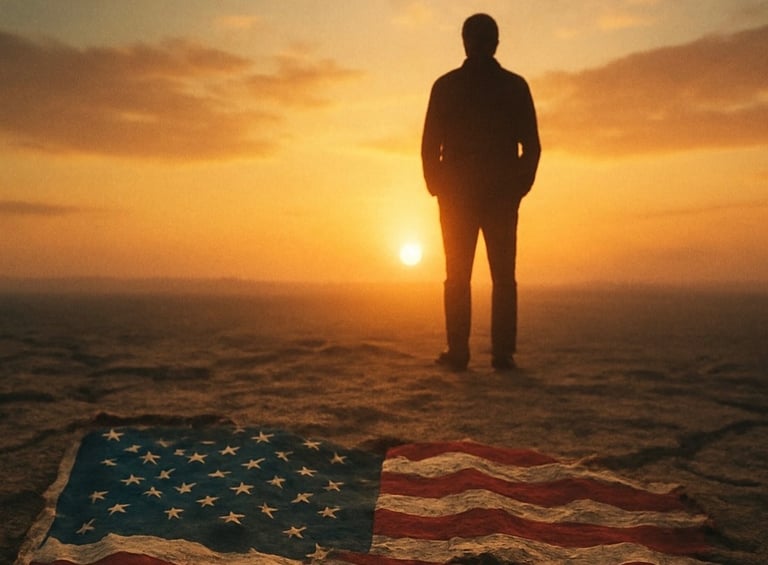
AI Generated Image
trumpianinsanity.com © 2023-2025 All Rights Reserved
Trumpian Insanity empowers people with the knowledge and tools to participate in meaningful political discourse and contribute to positive change.
Reframe your inbox
Subscribe to my blog and never miss a story.
We care about your data in our privacy policy.