Faith That Ends Where Compassion Begins
When history looks back, it won’t care how many Bible verses you quoted. It will ask: Did you show mercy? Did you feed the hungry? If the answer is no — if your religion justified the suffering of others — then your faith was never about God. It was about you.
RELIGIONCULTUREIMMIGRATIONHEALTHCARE

If you can look at a human being writhing in pain in an emergency room and think, “They’re undocumented, they don’t deserve care,” you are not a good person.
If you can watch a child cling to their parent as ICE agents drag them away at a grocery store, a school pick-up line, or a courthouse, and your first instinct is to laugh, record it, or say “That’s what they get,” you are not a good person.
There’s no theological loophole, no patriotic slogan, no “law and order” defense that can make that okay.
The Cruelty Is the Point
Let’s stop pretending that cruelty toward immigrants, the poor, and the marginalized is some accidental side effect of policy. It’s not.
It’s the point.
It’s become the twisted proof of allegiance — the way some Americans show they’re on the “right side.”
And they drape that cruelty in the flag and call it patriotism. They wrap it in a Bible verse and call it righteousness.
But don’t tell me about your God if you think suffering makes someone less human.
Don’t tell me about “family values” when you cheer as families are ripped apart.
You cannot serve both cruelty and compassion. You have to pick one.
Church Without Christ
Some of the loudest people screaming about “Christian values” are the same ones applauding deportations, cutting food aid, and voting against programs that feed hungry children.
They preach about sin but never about mercy. They quote scripture but forget the parts about love, justice, and welcoming the stranger.
They wear crosses around their necks while stepping over the broken bodies of the people Jesus spent His life defending.
If your “faith” allows you to justify cruelty, it’s not faith — it’s a costume.
If your God requires that you harden your heart to the poor, the foreigner, the desperate, then maybe your God looks a lot more like you than the Christ you claim to follow.
The Hypocrisy of Selective Morality
You can’t scream about “protecting life” while cheering when desperate families drown in the Rio Grande.
You can’t quote “love thy neighbor” while calling asylum seekers “animals.”
You can’t hide behind your church pew while blessing policies that ensure children go hungry and sick people die.
Stop pretending this is about law. It’s about hate.
Stop pretending this is about order. It’s about cruelty.
Because if your “law and order” demands that compassion be a crime, then the law itself has become immoral.
Humanity Isn’t a Privilege
Immigrants are not asking for luxury — they’re asking to live. To breathe. To not be hunted, mocked, and dehumanized.
They come because the system we helped break in their countries left them with no other option. And we, the so-called “Christian nation,” meet them not with open arms, but with cages, contempt, and callousness.
The truth is simple: if your empathy stops at a border, it was never empathy at all.
If your morality only applies to people who look like you, it’s not morality — it’s tribalism dressed up as virtue.
And if you can justify cruelty in the name of Christ, then you’ve rewritten the Gospel into something unrecognizable.
Show Me Your Faith by Your Works
Don’t tell me you’re a good Christian. Show me.
Show me in how you treat the undocumented worker cleaning your office.
Show me in whether you look away when families are broken apart in your community.
Show me in whether you speak up when politicians weaponize fear and faith to win votes.
Because faith isn’t proven by what you post, or where you pray.
It’s proven by what you do when faced with someone who has nothing to give you back.
The Final Judgment
When history looks back, it won’t care how many Bible verses you quoted. It will ask:
Did you show mercy?
Did you feed the hungry?
Did you heal the sick?
Did you protect the stranger?
If the answer is no — if your religion justified the suffering of others — then your faith was never about God. It was about you.
There is no holiness in hate.
There is no righteousness in cruelty.
And there is no salvation in silence.
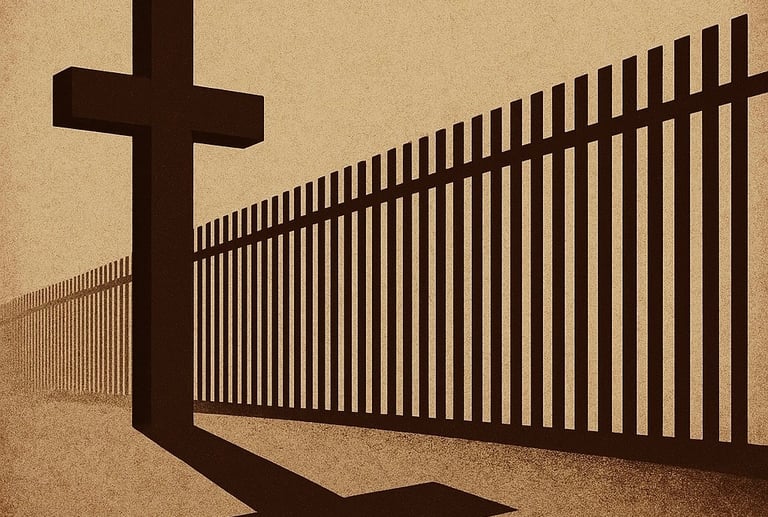
AI Generated Image
trumpianinsanity.com © 2023-2025 All Rights Reserved
Trumpian Insanity empowers people with the knowledge and tools to participate in meaningful political discourse and contribute to positive change.
Reframe your inbox
Subscribe to my blog and never miss a story.
We care about your data in our privacy policy.